
Beyond CCTV: How BURD AI Video Analytics Is Transforming Safety, Security, and Operations
For decades, organizations have relied on CCTV cameras to monitor facilities, investigate incidents, and maintain security. But traditional surveillance has one major limitation: cameras can record what happens, yet someone still needs to watch the footage, identify the relevant event, and decide what to do next.
As organizations manage larger facilities, more cameras, and increasingly complex safety and security requirements, manually monitoring every video feed becomes impractical.
This is where AI-powered video analytics is changing the role of surveillance.
Instead of simply recording an event, intelligent video analytics can help organizations understand what is happening within a camera feed, identify predefined events or activities, generate alerts, and create structured information that teams can use for faster decision-making.
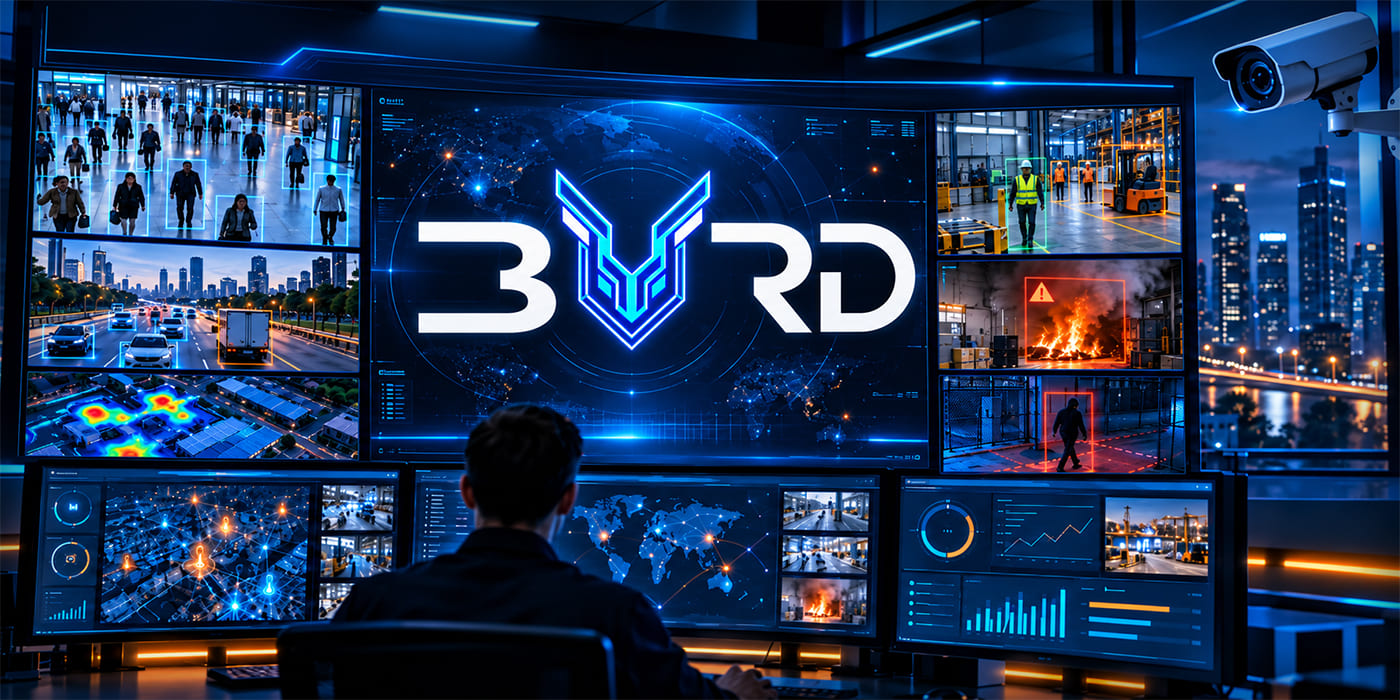
BURD Bio User Recognition Data is Hubcom’s AI-powered video analytics platform designed to transform existing camera infrastructure into an intelligent layer for safety, security, compliance, and operational visibility.
From Passive CCTV to Intelligent Video Analytics
Traditional CCTV is primarily reactive.
An incident occurs.
The footage is reviewed.
The relevant moment is identified.
An investigation begins.
AI video analytics introduces a more proactive approach.
BURD analyzes supported camera feeds using computer vision and AI models designed to recognize specific objects, activities, movements, and events. Instead of requiring teams to continuously watch multiple screens, the system can highlight events that may require attention.
The goal is simple:
Detect. Understand. Alert. Act.
By combining existing camera infrastructure with AI-powered analytics, organizations can gain greater visibility into what is happening across their facilities without relying entirely on manual observation.
What Is BURD?
BURD is an intelligent video analytics solution developed to help organizations extract meaningful information from live and recorded camera feeds.
Depending on the deployment and configured analytics, BURD can support use cases ranging from workplace safety and vehicle monitoring to people analytics, retail loss prevention, food-safety monitoring, and operational intelligence.
Rather than treating cameras as passive recording devices, BURD allows businesses to use them as intelligent sensors.
The platform can be deployed across environments such as:
- Construction sites
- Manufacturing facilities
- Warehouses
- Logistics hubs
- Retail stores
- Shopping malls
- Restaurants and commercial kitchens
- Corporate offices
- Parking areas
- Industrial facilities
- Transportation environments
- Ports and secured facilities
The result is a centralized approach to turning video into actionable information.
Key BURD AI Video Analytics Use Cases
1. Workplace PPE and Safety Monitoring
Maintaining safety compliance across large worksites can be challenging, particularly when multiple teams, contractors, and operational areas need to be monitored simultaneously.
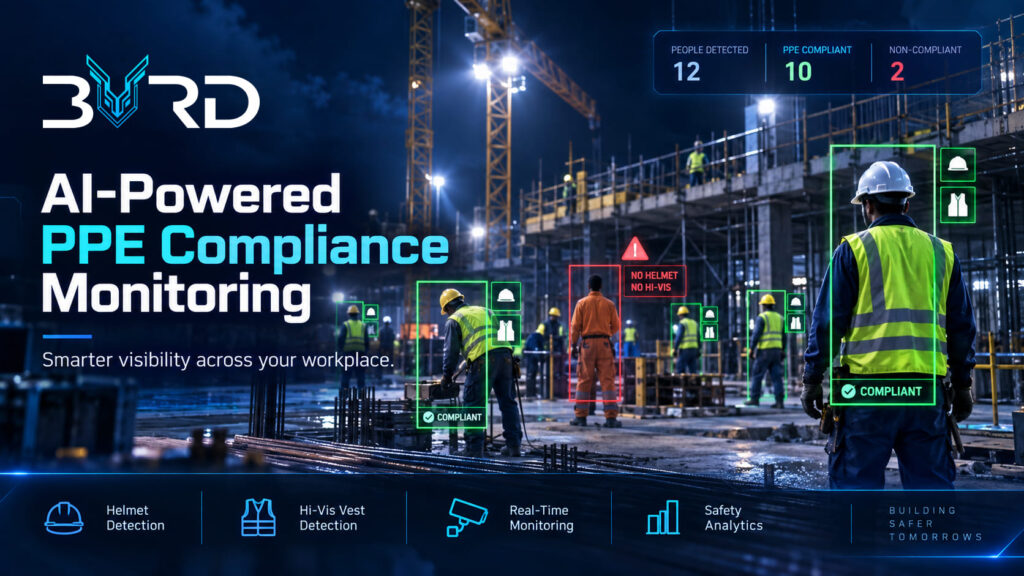
BURD can help organizations monitor visible PPE compliance through camera feeds.
Depending on the configured environment, the system can identify safety-related conditions such as workers without required protective equipment, including helmets, safety vests, and other supported PPE.
This capability can be valuable across:
Construction Sites • Manufacturing Plants • Warehouses • Logistics Yards • Oil & Gas Facilities • Industrial Workplaces
Instead of relying entirely on manual observation, safety teams gain another layer of visibility that can help them identify potential compliance issues earlier. The objective is not to replace safety professionals. It is to give them better information so they can respond faster.
2. AI-Powered Fire Detection
During a fire emergency, every second matters.
Traditional surveillance cameras may record the incident, but detection often depends on someone noticing what is happening.
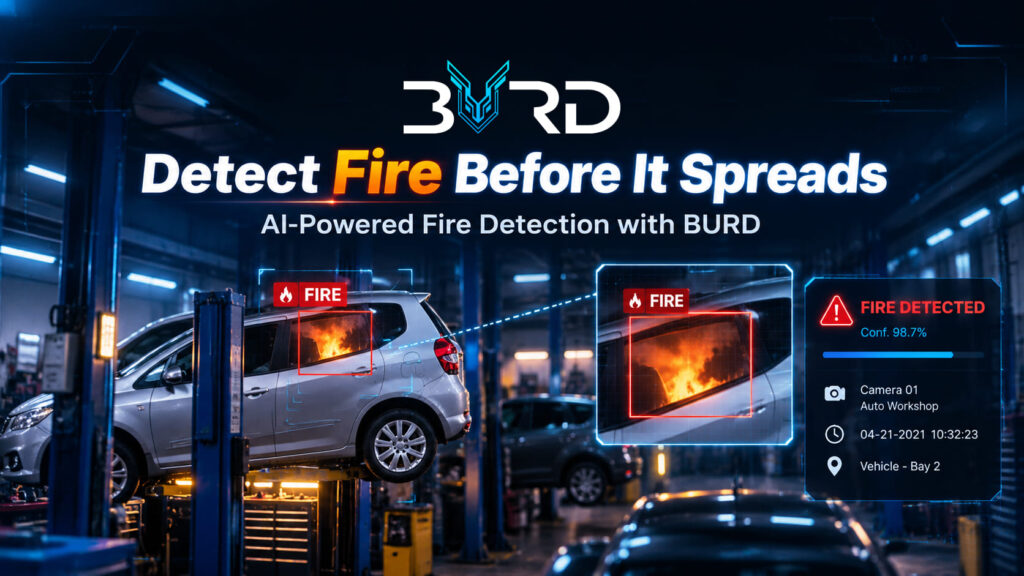
BURD can analyze video streams for configured visual indicators associated with fire events and generate alerts when a potential incident is detected.
This gives organizations another monitoring layer that can support faster awareness and emergency response.
Potential environments include:
Warehouses • Manufacturing Facilities • Industrial Sites • Construction Areas • Commercial Buildings • Logistics Facilities
Combined with established fire-safety systems and emergency procedures, AI video analytics can strengthen situational awareness across monitored areas.
3. License Plate Recognition and Vehicle Monitoring
Organizations with frequent vehicle traffic need visibility into what is entering and leaving their premises.
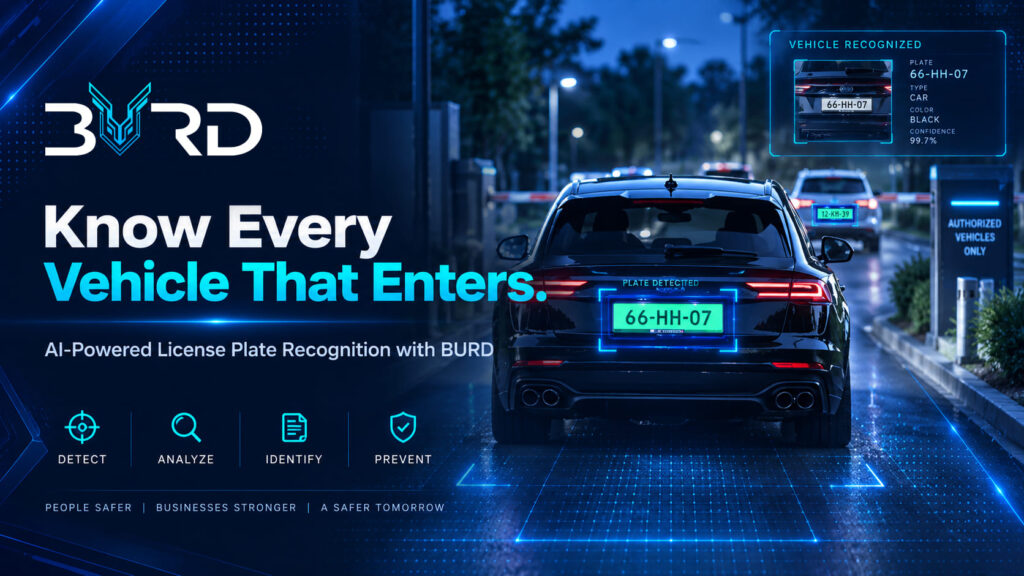
BURD’s License Plate Recognition capability can identify supported vehicle license plates from camera feeds and create structured records around vehicle movement.
This can help organizations maintain information related to vehicle entry and exit, including recognized license plates and movement records.
Typical deployment areas include:
Corporate Gates • Parking Areas • Warehouses • Industrial Facilities • Logistics Hubs • Distribution Centers • Secured Entry Points
Instead of manually maintaining vehicle registers, organizations can use automated video analytics to improve traceability and simplify investigations.
Your cameras do not simply see a vehicle entering.
With BURD, they can help create a searchable record of that movement.
4. Retail Cashier Monitoring and Loss Prevention
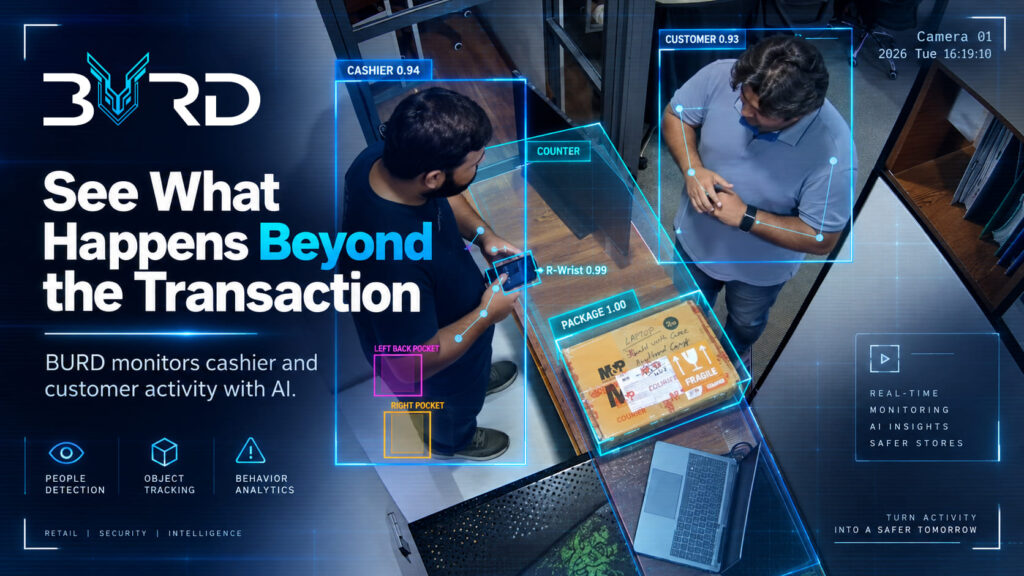
Retail losses do not always occur in obvious ways.
Cashier environments can involve hundreds or thousands of transactions, making it difficult for security teams to manually review every interaction.
BURD can analyze defined cashier zones and monitor activities such as cash-drawer interactions, customer handovers, and configured movement patterns.
Where supported, unusual patterns such as movement between a cash drawer and an employee pocket can be highlighted for further investigation.
Potential environments include:
Retail Stores • Supermarkets • Restaurants • Convenience Stores • Pharmacies • Fuel Stations • Cash Counters
BURD does not replace an investigation or determine intent. Instead, it helps loss-prevention teams identify moments that may deserve closer review.
This allows security teams to spend less time searching through hours of footage and more time investigating relevant events.
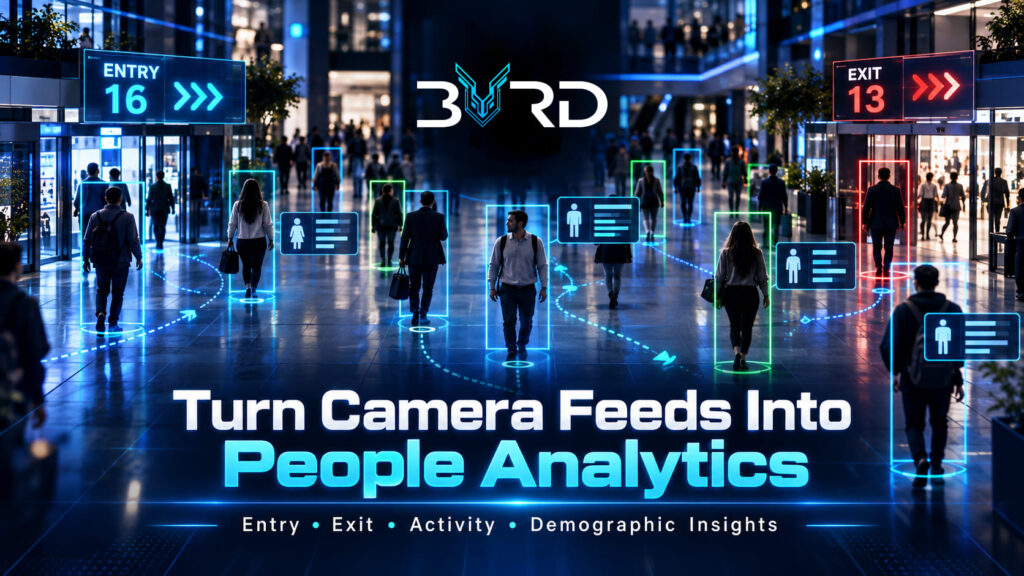
5. People Analytics and Visitor Intelligence
Cameras can provide more than security footage.
They can also help organizations understand how people move through physical spaces.
BURD People Analytics can provide insights such as:
- Entry activity
- Exit activity
- Standing or dwell activity
- Visitor counts
- Movement trends
- Aggregate demographic classification where configured
These insights can help organizations better understand visitor flow and how physical spaces are being used.
Potential applications include:
Shopping Malls • Retail Stores • Airports • Corporate Buildings • Events • Universities • Public Facilities
For example, an organization may use entry and exit analytics to understand visitor volumes, identify peak periods, or evaluate traffic patterns across different areas.
This transforms video from a security-only resource into an operational intelligence source.
6. Food-Safety and Hygiene Monitoring
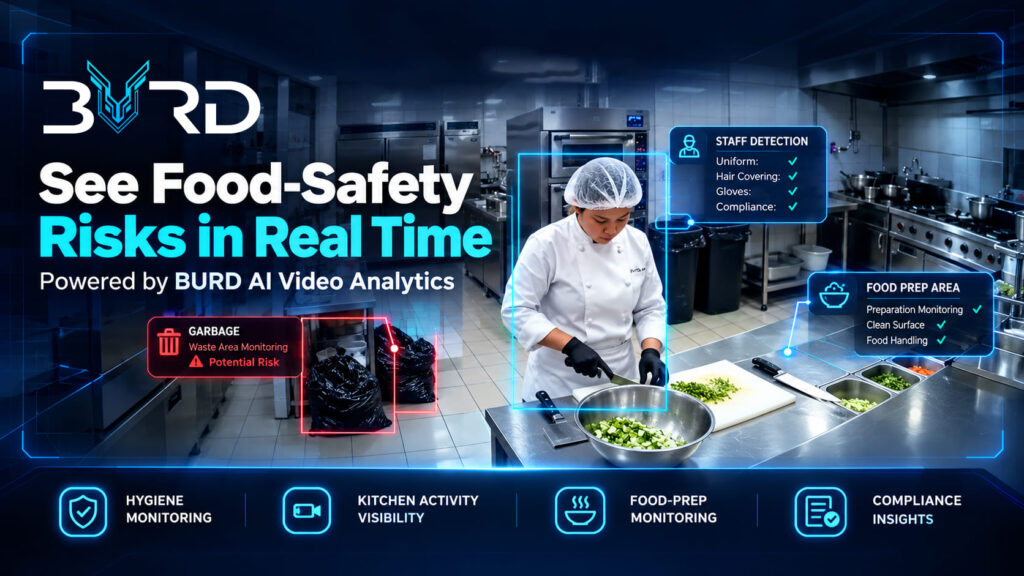
Food safety depends on consistent processes and compliance.
In environments such as commercial kitchens and food-processing facilities, maintaining visibility across every workstation can be difficult.
BURD can support visual monitoring of configured food-safety and PPE requirements, helping organizations identify visible compliance gaps in monitored areas.
Potential environments include:
Restaurants • Commercial Kitchens • Hotels • Catering Facilities • Food Manufacturing • Food-Processing Facilities
Rather than replacing existing food-safety procedures, AI-powered monitoring can provide an additional layer of oversight and help teams respond to visible compliance issues more quickly.
7. Facial Recognition and Person Identification
In controlled deployments, BURD can support facial recognition and person identification capabilities for applications where organizations need to distinguish registered individuals from unknown persons.
Depending on the organization’s requirements and applicable policies, this can support scenarios such as authorized-person monitoring, workforce identification, attendance-related workflows, or secured environments.
These deployments should always be implemented with appropriate access controls, privacy requirements, organizational policies, and applicable regulations in mind.
8. Anomalous Event Detection
Some events require immediate attention even when no one is actively watching the camera feed.
BURD can support configured anomalous-event detection scenarios, including activities such as falls or physical altercations.
When an event matching the configured analytics is identified, the system can help surface it for review.
Potential applications include:
Industrial Sites • Workplaces • Public Facilities • Warehouses • Corporate Environments
This can help security and operational teams focus attention on events that may require intervention rather than monitoring every camera continuously.
9. Logistics, Port, and Transportation Intelligence
Vehicle and asset movement becomes increasingly complex within logistics and transportation environments.
BURD can support specialized computer-vision use cases such as:
- Vehicle identification
- License plate recognition
- Driver recognition
- Container number recognition
- Entry and exit monitoring
- Event logging
These capabilities can provide greater visibility across ports, yards, logistics hubs, warehouses, and secured transportation facilities.
Instead of maintaining isolated manual records, organizations can use video analytics to create structured information around physical movements.
One Platform, Multiple Industries
One of the strengths of BURD is that the same underlying AI video analytics platform can address different operational requirements.
Retail
People analytics, customer traffic insights, cashier monitoring, vehicle monitoring, and loss-prevention support.
Construction
PPE compliance, workforce safety monitoring, fire detection, and safety-event awareness.
Manufacturing
PPE monitoring, fire detection, personnel activity monitoring, and facility security.
Warehousing and Logistics
Vehicle entry and exit, license plate recognition, PPE compliance, people monitoring, and logistics visibility.
Food and Hospitality
Food-safety monitoring, visible PPE compliance, workforce monitoring, and facility analytics.
Corporate Facilities
Visitor analytics, people counting, authorized-person monitoring, vehicle recognition, and entry/exit analytics.
Ports and Transportation
Vehicle recognition, driver identification, container recognition, access monitoring, and movement records.
Rather than deploying an entirely different system for every use case, organizations can build multiple analytics capabilities around a common video-intelligence platform.
Turn Existing Cameras Into Intelligent Sensors
Many organizations already have significant investments in CCTV infrastructure.
The challenge is that much of the information captured by those cameras remains unused unless someone actively watches the footage.
BURD is designed to work with supported camera infrastructure and video streams so organizations can add an intelligent analytics layer to their surveillance environment.
This can help businesses extract greater value from existing cameras without treating every new analytics requirement as a completely separate monitoring system.
A camera that once provided only a video feed can become a source of structured operational intelligence.
From Detection to Decision
The real value of AI video analytics is not simply recognizing an object or drawing a detection box around a person.
The value comes from what happens next.
Detect
Identify the configured object, activity, or event.
Alert
Surface relevant events when attention may be required.
Investigate
Allow teams to focus on important footage rather than searching manually.
Analyze
Use recorded events and trends to understand what is happening across the organization.
Improve
Use those insights to strengthen safety, security, compliance, and operational processes.
This is the difference between simply collecting video and turning video into intelligence.
Your Cameras Already See What Is Happening. The Next Step Is Helping Them Understand It.
With BURD AI Video Analytics, organizations can transform existing video infrastructure into an intelligent layer for safety, security, compliance, and operational insight.
From identifying workplace safety risks and monitoring vehicle movements to understanding visitor activity and highlighting suspicious events, BURD helps teams move beyond simply reviewing footage toward acting on meaningful information.
See more. Understand faster. Act smarter with BURD.